
What counts as "AI"? Machine learning, deep learning, generative and predictive — untangled
Artificial intelligence is being referenced everywhere — and we use the term like the word “stuff.” Can you get me that stuff? Stuff could mean anything. We do the same with “AI”: an in-home speaker, a chatbot, a robot that dances — it all gets the same label. When one word means everything, it means nothing.
Let us fix that. Three things: what AI actually is, the two ways to classify it, and where AI is genuinely strong today — and where it is not.
What AI actually is — think of a tree
Think of a tree. The trunk is computer science — everything about getting computers to do work. AI is one big branch growing off that trunk: the part focused on getting computers to do things that normally need human thinking — reasoning, learning from experience, understanding, and acting.
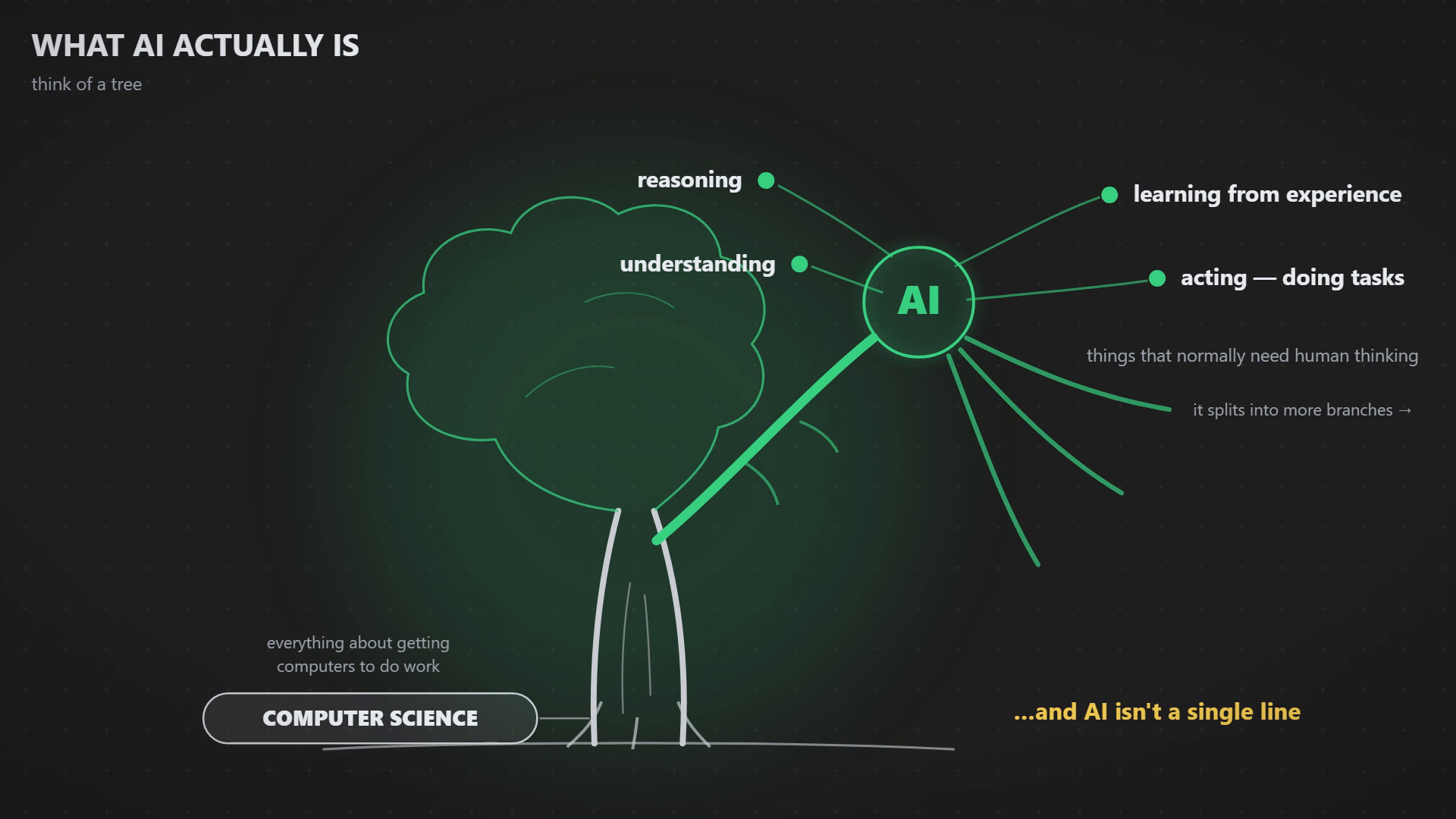
Follow the AI branch out and the structure gets clearer:
- Machine learning — algorithms trained on massive datasets to recognize patterns and make predictions. It splits two ways: by technique and by purpose.
- Deep learning (the technique side) — multi-layer neural networks that handle complex data like text and images. Today’s generative AI runs on this.
- Generative vs predictive (the purpose side) — create versus predict. More on that next, because it is the most useful lens in daily work.
- The applications — natural language processing, computer vision, and robotics. Each one combines the pieces above to reach into the real world.
So the nesting is: AI ⊃ machine learning ⊃ deep learning, with applications built on top.
The practical split: generative vs predictive
Both live under machine learning, and both learn from data instead of hardcoded rules. The difference is what they are for.
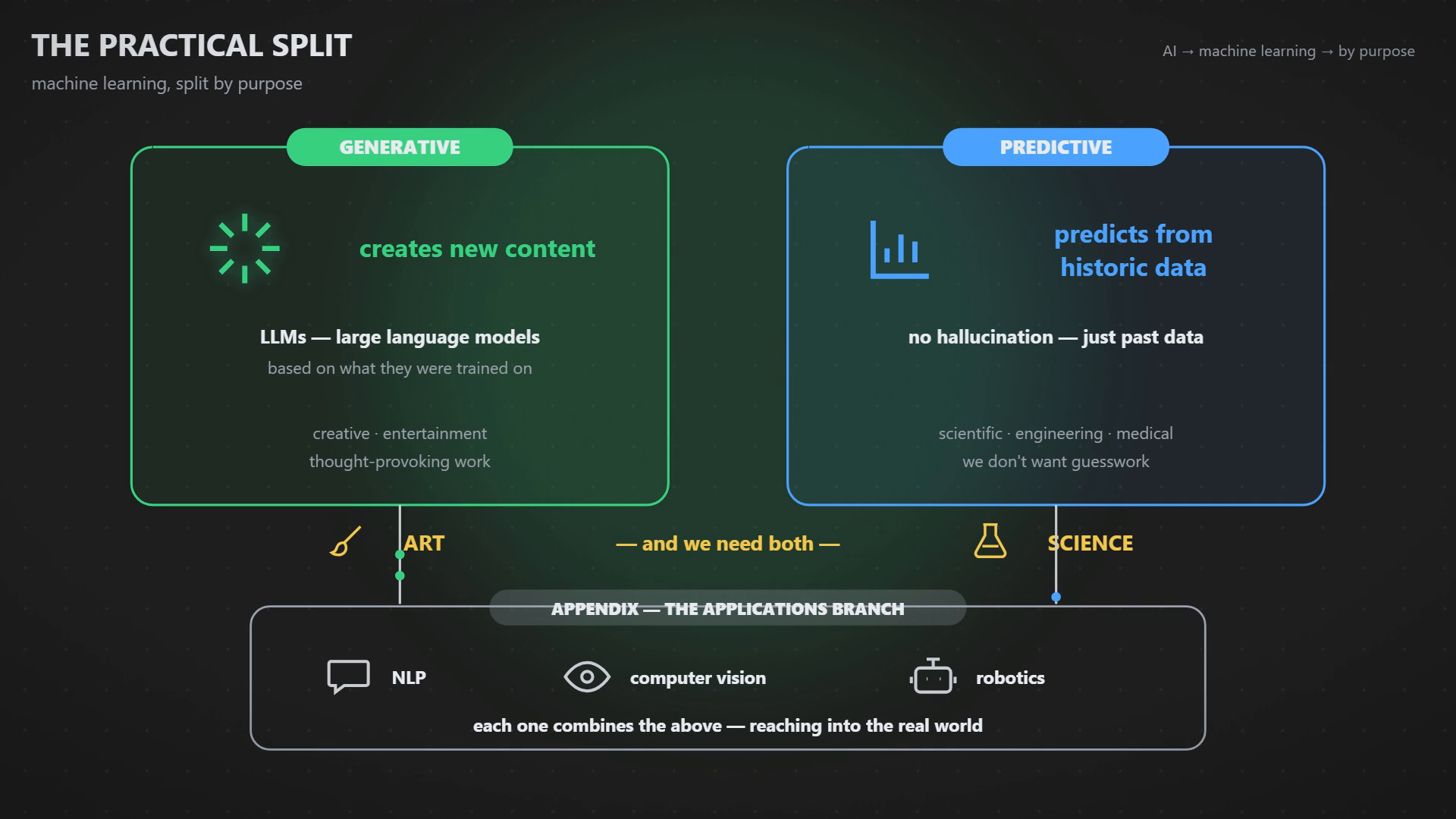
Generative AI creates new content, based on what the large language models — LLMs — were trained on. That is what you want for creative, entertainment, or thought-provoking work.
Predictive AI predicts from historic data, as the name says. No hallucination — just past data. That is what you want in scientific, engineering, or medical work, where guesswork is the last thing anyone needs.
Generative is the art; predictive is the science — and we need both. If you take one decision rule from this article: creation needs generative, decisions need predictive. A surprising number of “AI went wrong” stories are just this pairing done backwards.
The official ladder: ANI → AGI → ASI
If you are looking for the official categorization, artificial intelligence has three levels.
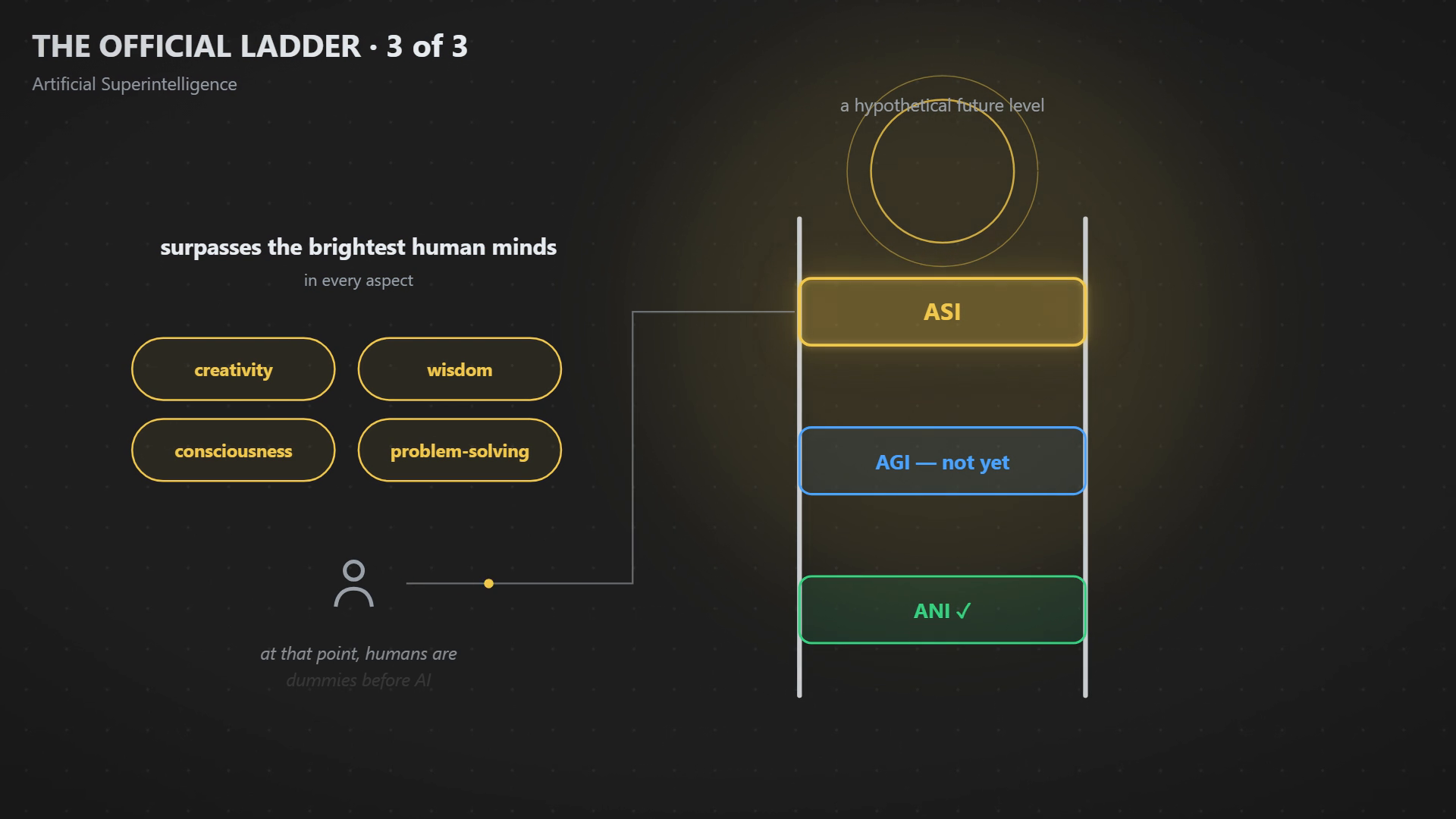
Artificial Narrow Intelligence (ANI) — called “weak AI,” which is a misleading name, because it is the most predictable AI we have: chess engines, language translation, reading medical X-rays. One narrow domain, all the intelligence concentrated there — so it performs really well. This is where we are today.
Artificial General Intelligence (AGI) — “strong AI.” An honest take: we are not there yet. Real AGI would match a human across any domain — learn it, reason about it, apply it the way a person does. What we have today is more of a jack of all trades, master of none. Genuinely impressive — not the real thing. Not yet.
Artificial Superintelligence (ASI) — a hypothetical future level where the machine surpasses the brightest human minds in every aspect: creativity, wisdom, consciousness, problem-solving.
Where AI is actually strong today — the five-senses test
A useful way to gauge real progress: map AI against the five human senses, plus thinking.
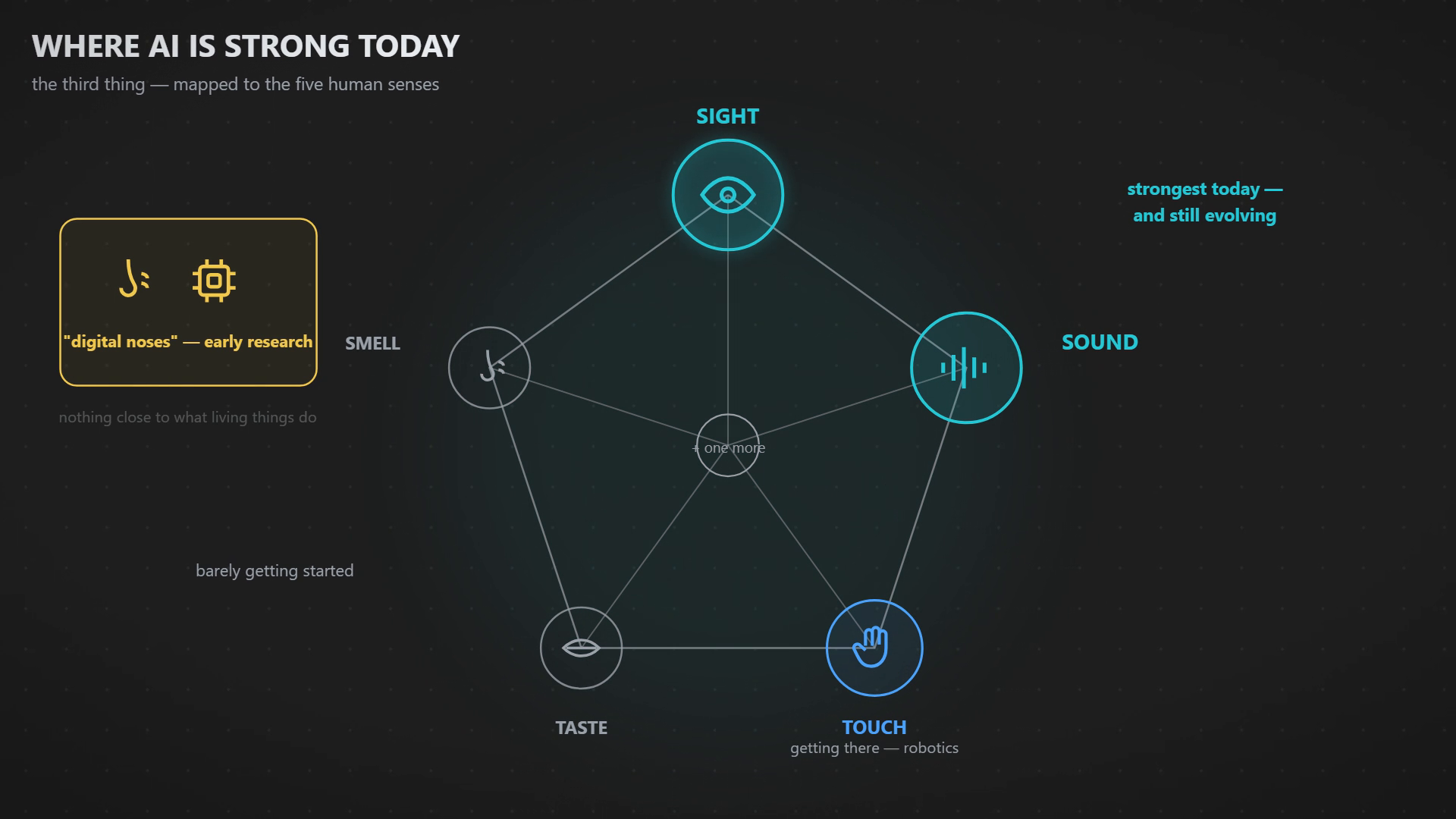
- Sight and sound — strongest today, and still evolving. Computer vision and speech are where AI genuinely delivers.
- Touch — getting there through robotics.
- Taste and smell — barely getting started. There is early research on “digital noses” that sniff chemicals, but nothing close to what living things do.
- Thinking — still the domain of living organisms. AI can generate, predict, see, and hear, but it still misses judgments a child gets right. Common sense is the gap that matters most.
The takeaway
Next time someone throws around the word “AI,” you will know exactly which part they mean — machine learning or deep learning, generative or predictive, narrow or general. Ask the two questions — generative or predictive? narrow or general? — match the tool to the job, and keep a human on the common-sense gap.
Related on CyberIntel AI Academy: What is an AI agent? A clear definition and a real security example · The jailbreak that shut down a frontier AI for 19 days