
What is an AI agent? A clear definition and a real security example
When you hear “AI agent,” what comes to mind? A chatbot? A coding agent like Claude Code or Cursor? An autonomous agent that does digital tasks for you? All of those answers are correct — which is exactly the problem. Let us look at what an agent actually does under the hood, walk through a real enterprise use case from application security, and finish with the judgment call that matters: when an agent beats a regular program.
The definition
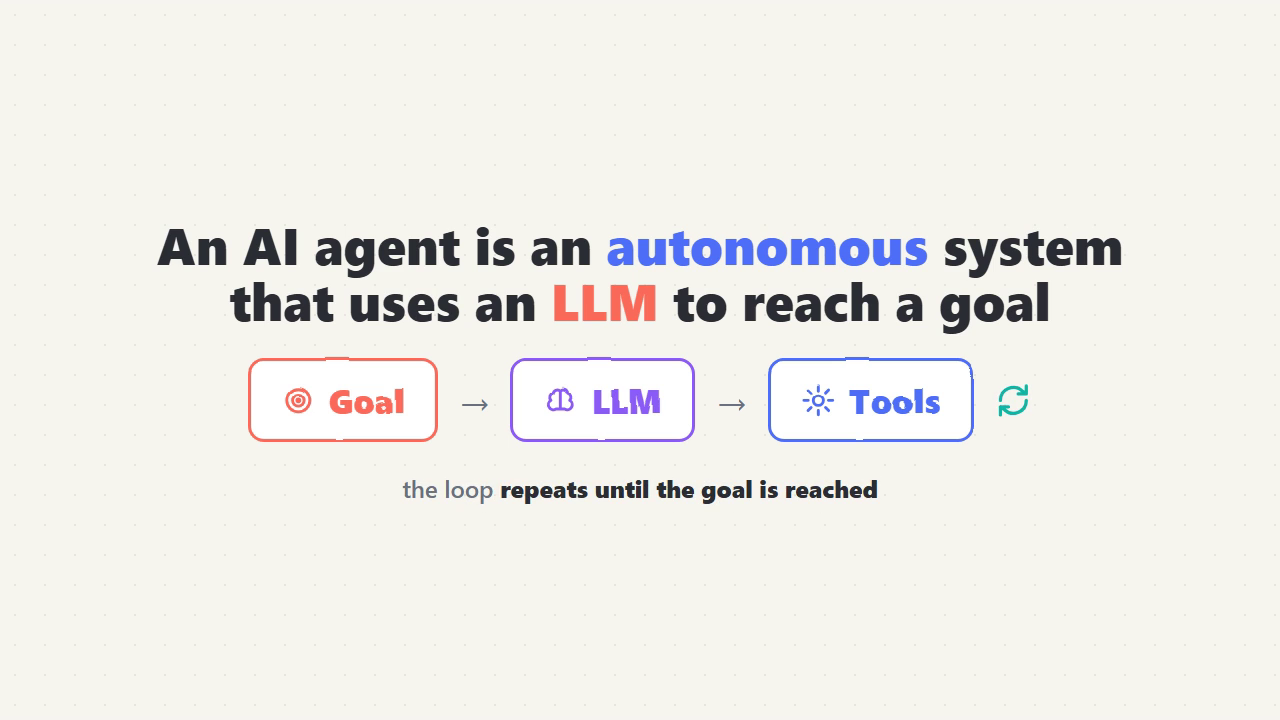
An AI agent is an autonomous software system that uses a Large Language Model — the LLM is the “AI” in “AI agent” — to perceive its environment, use tools, make decisions, and take independent actions to achieve a specific goal. You establish a goal, you give the agent an LLM and the necessary tools and permissions, and you let it repeat the loop until the goal is reached.
The components
Every agent is built from the same parts:
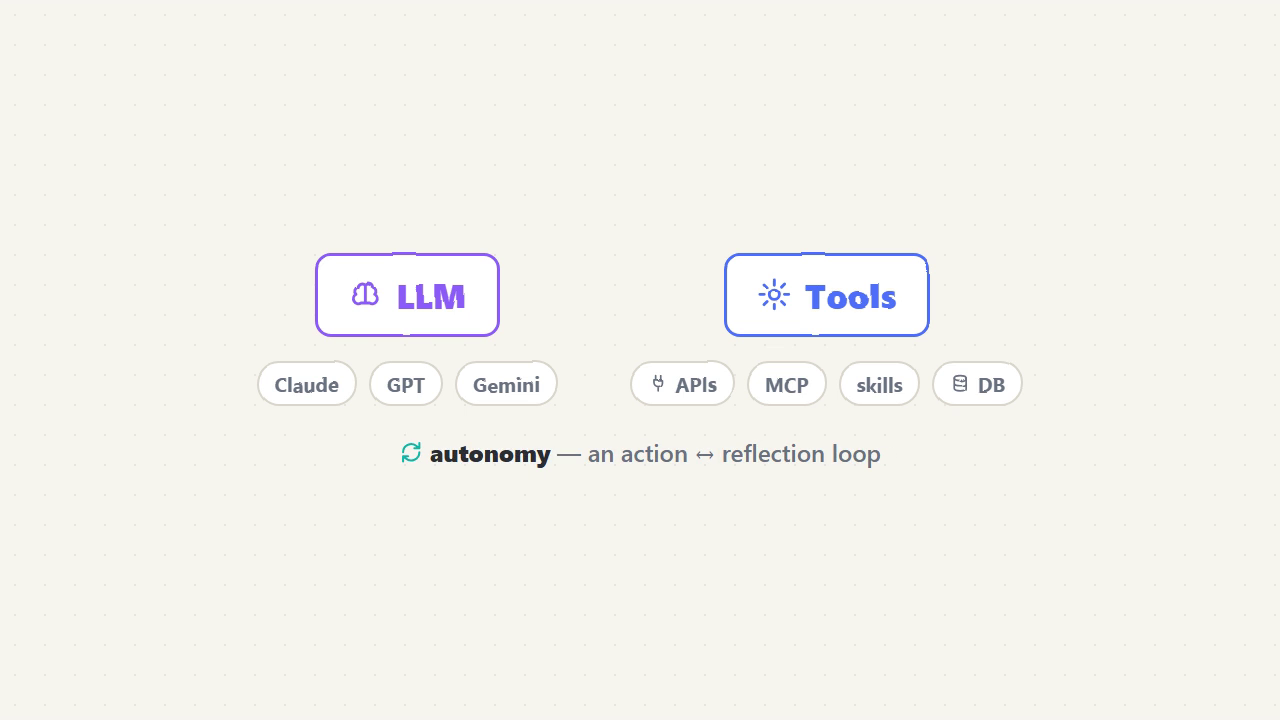
- The LLM — the brain for reasoning and decision-making. It can be Claude, GPT, Gemini, or one of many open-weight models.
- The tools — existing reliable programs, internal and external APIs, MCP servers, specialized skills, and even databases.
- Autonomy — you grant it by setting up action-and-reflection loops that run until the goal is reached.
One honest caveat before the example. An agentic approach is not deterministic like a software program — it is probabilistic. But with guardrails and an agent harness, you can make it almost deterministic. A harness is the execution framework that integrates the LLM, tools, MCP servers, and skills while enforcing guardrails, memory management, response verification, and continuous logging and monitoring.
A real example: two agents in an application-security program
Skip the usual book-a-flight demo. In our AppSec program we used two agents working as a team: a collector agent — call her Colleen — and a research agent, Ray.
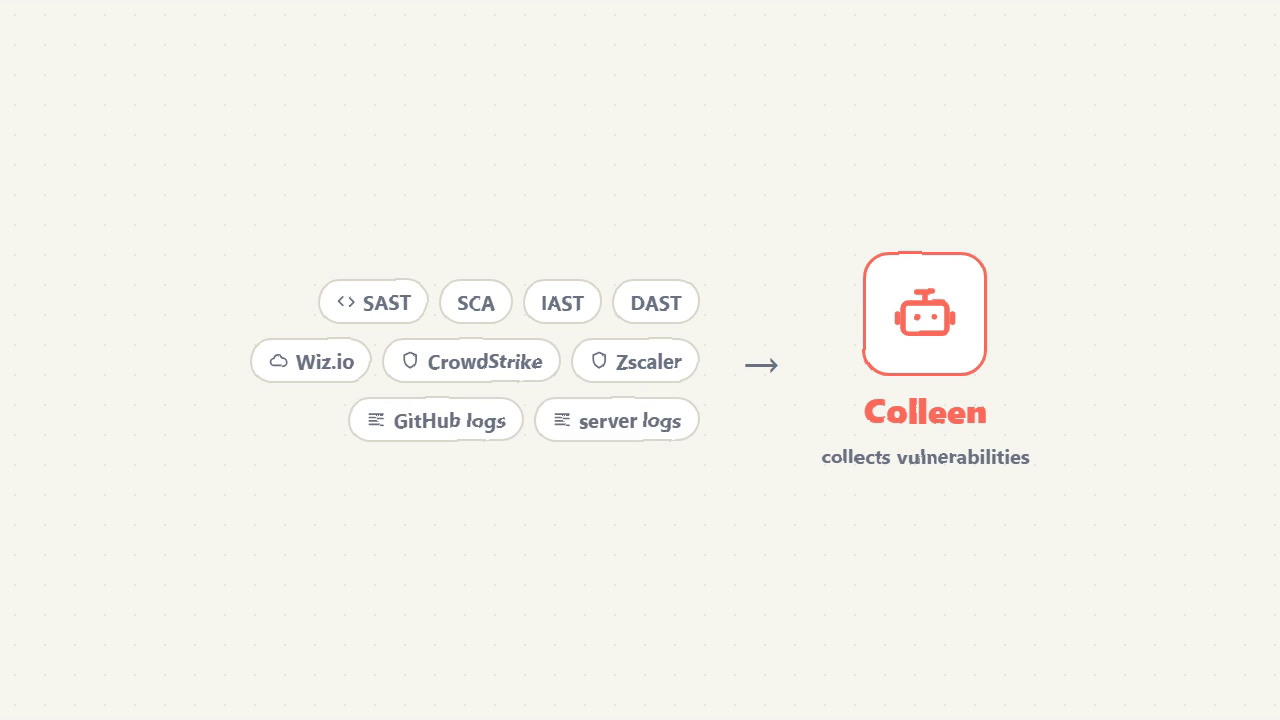
Colleen collects vulnerabilities from very different sources: application-security scanners (SAST, SCA, IAST, DAST), detection tools like Wiz.io, CrowdStrike, and Zscaler, plus GitHub access logs and server logs. Her job is to prioritize the data with the highest value, normalize it, and store it in standard formats like SARIF and JSON.
At this point you might be thinking: a program can do this. Yes — until the data stops cooperating. A lot of this input is unstructured (reports from sources with no API, screenshots, design diagrams) and unpredictable (sources change, formats are not well defined). A traditional program throws an exception when it hits something unexpected. An agent can dynamically adapt, analyze the failure, and self-correct to find a workaround.
Ray researches what Colleen collected. He ingests the normalized datasets and runs advanced threat analysis: validating suspicious SHA-256 hashes, malicious IPs, and compromised websites against external threat intelligence — VirusTotal, GreyNoise, the GitHub Advisory Database, and CISA KEV — then correlates events across sources by timestamp and blends in internal corporate context: our applications, products, and tech stack. The output is a prioritized security report mapped by risk and impact, ready to hand to the security team.
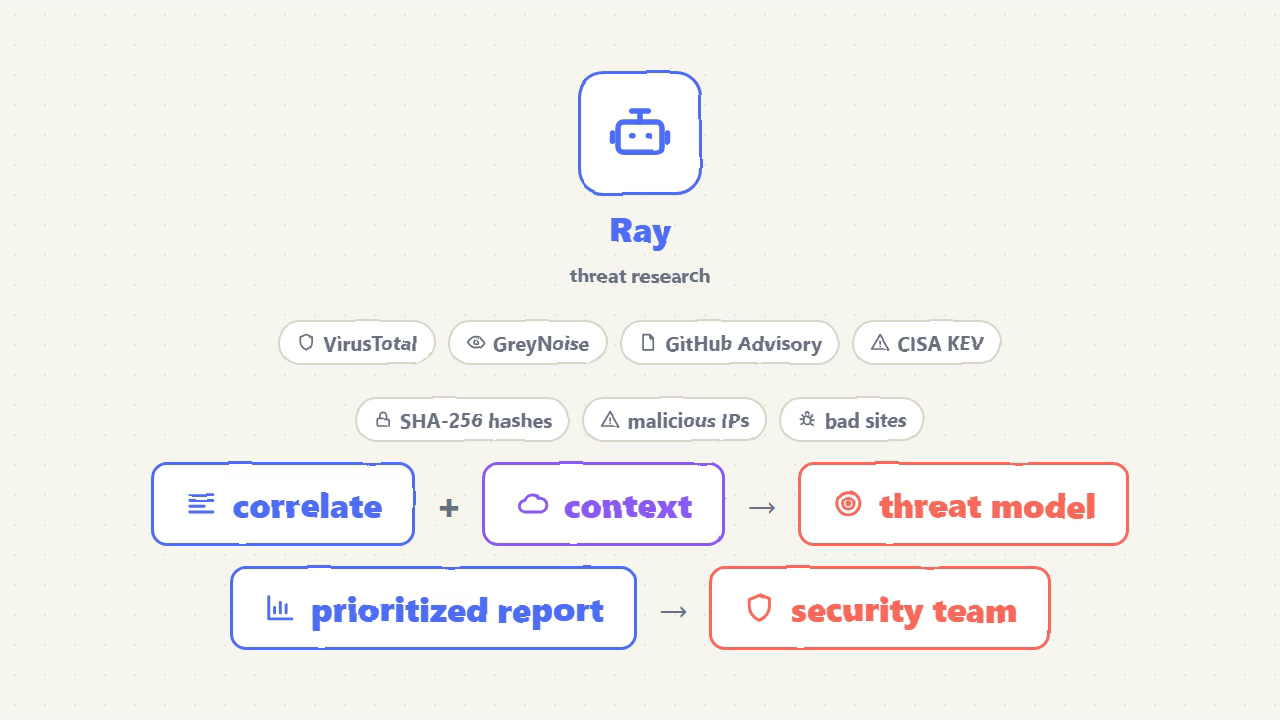
The result: by filtering out low-impact background noise across multiple tools, we target the high-likelihood, high-severity vulnerabilities first — layered defense that secures the most critical assets before anything else.
Why an agent instead of a program?
A traditional program is great at structured, expected data — JSON, XML. The second you throw unexpected data at it, it breaks. Give it a screenshot and it fails, because it does not know how to spin up OCR on its own. An agent has a reasoning advantage: mix raw server logs with threat-intelligence data and it can think through the pile and tell a routine log entry from a real vulnerability.
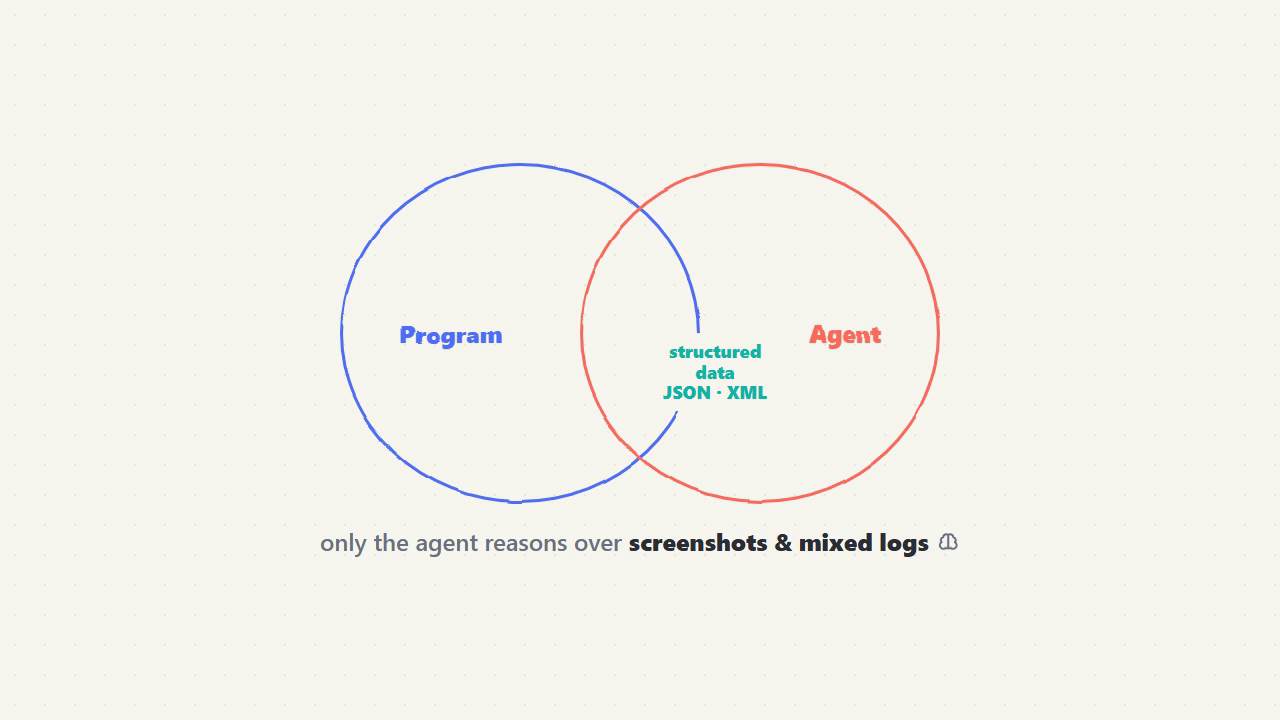
Reach for an agent when your data is large, unorganized, unstructured, or unexpected — and the fix requires continuous loops of reasoning and iteration that a rigid program cannot give you.
Your first step
Think of one data-heavy problem in your own domain right now, and sketch it out with this simple formula: Goal + Planning + LLM + Tools. That is your very first agent.
Related on CyberIntel AI Academy: What counts as “AI”? Machine learning, deep learning, generative and predictive — untangled · The jailbreak that shut down a frontier AI for 19 days